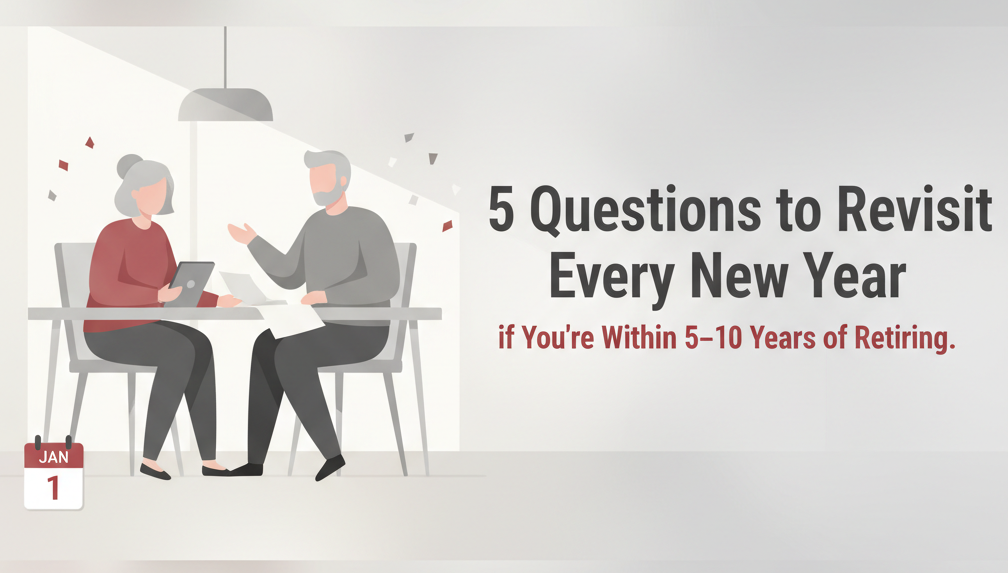


The final decade before retiring is often one of the most pivotal financial periods in your life. You’re close enough to see the finish line — but still have time to make meaningful adjustments that can shape your comfort and peace of mind later. Each new year provides an opportunity to take stock of where you stand and where you might need to adjust course.
Here are five key questions worth revisiting as you prepare for your next chapter:
-
Am I still on track to retire when I want to?
Your desired retirement age might have been clear when you first mapped out your plan, but financial markets, job changes, family dynamics, and inflation can all alter your trajectory. Run updated projections on your savings and income sources each year to verify whether your current pace supports your ideal timeline. The goal isn’t just reaching retirement—it’s doing so with enough confidence that you can maintain your lifestyle without worry.
-
How much income will I actually need in retirement?
Estimating expenses is not a one-and-done exercise. As your lifestyle goals take shape — from travel plans to supporting loved ones — your spending needs can change. Keep an updated retirement budget that includes both essential and discretionary expenses, along with healthcare costs, which tend to rise as we age. Reassess how different income streams, such as Social Security, pensions, and investment withdrawals, will work together to meet your needs after taxes and inflation.
-
Is my investment strategy aligned with my time horizon and risk tolerance?
The closer you get to retirement, the more important it becomes to strike the right balance between growth and protection. Too aggressive, and you risk a market downturn just before needing your funds. Too conservative, and your savings may not keep pace with inflation. Review your portfolio allocation each year to confirm that it aligns with your timeline, goals, and current market conditions. Regular rebalancing can help manage risk and keep your investments on track with your overall plan.
-
Have I optimized my tax and withdrawal strategies?
A thoughtful tax strategy can significantly improve how long your retirement savings last. As retirement nears, begin planning which accounts to draw from first—taxable, tax-deferred, or tax-free—and evaluate whether Roth conversions or charitable giving strategies might make sense. Tax laws can shift over time, so revisiting these details annually with your advisor and tax professional can reveal opportunities to keep more of what you’ve earned.
-
Am I emotionally and practically ready for this transition?
Retirement isn’t only a financial shift—it’s a lifestyle redesign. Think about what your daily routine will look like, how you’ll stay engaged, and what gives your next chapter meaning. Many retirees are surprised at how intertwined finances and fulfillment become once their working years end. Taking time to plan for both can make your transition smoother and more rewarding.
Bringing Your Retirement Vision Into Focus
Preparing for retirement is about much more than picking a date—it’s about aligning your finances, goals, and values so you can step into the next chapter with clarity and confidence. Regularly revisiting these five questions helps you stay proactive rather than reactive as life changes.
If you’d like guidance in reviewing your current retirement plan or confirming that you’re on track for the future you envision, our team is here to help. Reach out to us to schedule a retirement plan review and start the new year with renewed direction and peace of mind.
Important Disclaimers: The information provided is for educational purposes only and does not constitute personalized financial, tax, or legal advice. Investment advisory services are offered through Saxon Financial Group, an SEC-registered investment advisor. All investing involves risk. Please consult with your financial advisor, tax professional, or attorney before making decisions based on this content. All information has been obtained from sources believed to be reliable, but its accuracy is not guaranteed. There is no representation or warranty as to the current accuracy, reliability or completeness of, nor liability for, decisions based on such information and it should not be relied on as such.
Contact us
Get Started Today
Take control of your financial future with confidence. Contact Saxon Financial Group to schedule your consultation and learn how we can tailor a financial plan around your unique needs. Together, we’ll guide you down the most strategic path to achieving financial security and peace of mind.


Tell us how we can help you today