

A bull market is a sustained period of rising stock prices (typically 20% or more gains), while a bear market is a prolonged decline of 20% or more from recent highs. These terms describe more than just price movements. They capture investor sentiment, economic conditions, and the momentum driving stock prices up or down.
A bull market occurs when stock prices rise by 20% or more from recent lows and stay elevated for at least two months. Bull markets reflect investor optimism and strong economic growth. A bear market happens when stock prices decline by 20% or more from recent highs and remain depressed for a sustained period. Bear markets signal pessimism and economic slowdown.
Understanding the difference helps you make smarter investment decisions regardless of market conditions, and working with portfolio management professionals can help you navigate both cycles successfully.
Key Insights
- Bull markets last an average of 2.7 to 9.1 years with typical gains of 112% or more
- Bear markets average just 9.6 to 16 months with typical losses around 35%
- Markets spend roughly 78% of time in bull territory and only 21% in bear markets
- The 20% threshold is the standard definition used to identify both market types
- Staying invested through both cycles typically outperforms trying to time the market
- Your investment strategy should match your timeline, not current market conditions
- Missing just a few of the market’s best days can significantly hurt long-term returns
What Is a Bull Market?
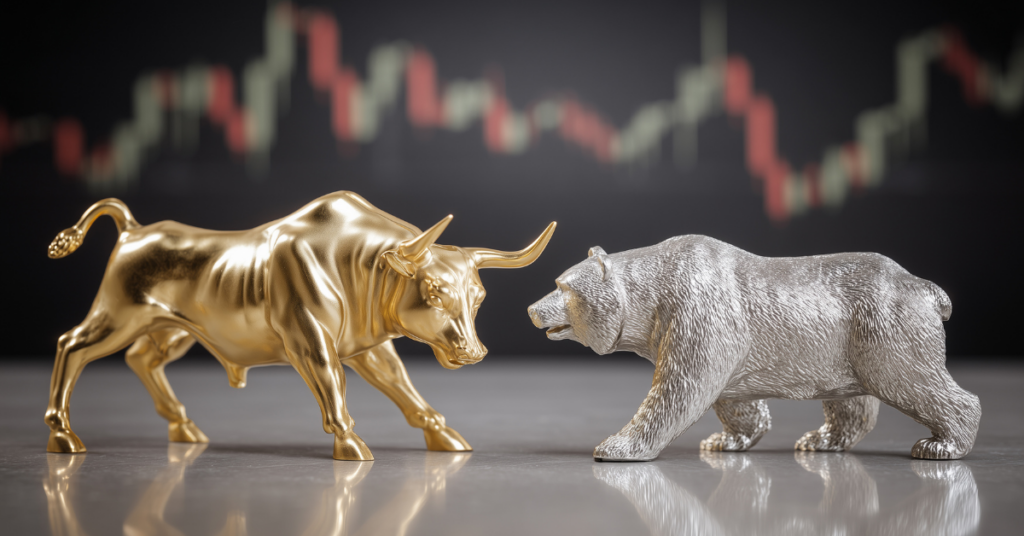
A bull market is a period when stock prices are rising. The technical definition is a 20% or more increase in a major stock market index from recent lows, sustained over at least two months. Think of the market charging forward like a bull thrusting its horns upward.
Bull markets happen when investor confidence is high and the economy is generally strong. More people want to invest, driving demand for stocks higher. This increased demand pushes prices up further, creating a self-reinforcing cycle of optimism. Employment is typically strong, corporate profits are growing, and consumers are spending freely.
Key characteristics of bull markets:
- Stock prices trending upward consistently
- High investor confidence and optimism
- Strong economic growth and low unemployment
- Increased trading activity and investment
- Rising corporate profits
- Low inflation rates supporting growth
What Causes Bull Markets?
Bull markets don’t appear randomly. They’re fueled by specific economic and psychological factors working together.
Strong economic fundamentals typically lead the charge. When unemployment is low and wages are rising, consumers have more money to spend. Companies see stronger sales and higher profits, making their stocks more attractive to investors. This positive cycle builds momentum.
Low interest rates play a crucial role. When borrowing is cheap, businesses invest in growth and consumers spend more freely. Lower rates also make bonds less attractive compared to stocks, pushing more money into equity markets.
Innovation and technological advancement can spark powerful bull markets. The internet boom of the 1990s drove one of history’s longest bull runs as investors poured money into companies building the digital future.
Government policies matter too. Tax cuts, business-friendly regulations, and supportive monetary policy from central banks can all fuel extended periods of market growth.
What Is a Bear Market?
A bear market is when stock prices are falling. The standard definition is a decline of 20% or more from recent highs, lasting at least two months. Picture a bear swiping its paw downward, pulling prices lower.
Bear markets reflect widespread pessimism and fear among investors. When prices start falling, more people sell their holdings to avoid further losses. This selling pressure pushes prices even lower, creating a downward spiral that can last months or even years.
Key characteristics of bear markets:
- Stock prices declining 20% or more from peaks
- Widespread investor pessimism and fear
- Economic slowdown or recession
- Rising unemployment
- Falling corporate profits
- Increased market volatility
What Causes Bear Markets?
Bear markets often signal or accompany economic trouble. Several factors can trigger a sustained market decline.
Economic recessions are common culprits. When the economy contracts, companies earn less, unemployment rises, and consumers cut spending. All of this translates to lower stock prices as investors reassess company valuations.
High inflation erodes purchasing power and squeezes corporate profit margins. When prices rise too quickly, it reduces consumer spending and business investment, dragging down the broader economy and stock market.
Rising interest rates can trigger bear markets. When central banks like the Federal Reserve raise rates to combat inflation, borrowing becomes more expensive. This slows business expansion and consumer spending, often leading to falling stock prices.
Geopolitical shocks create uncertainty. Wars, pandemics, trade tensions, and political instability can all spark widespread selling as investors flee to safer assets like bonds or cash.
Market bubbles eventually burst. When stock prices rise too far too fast, detached from underlying fundamentals, a correction becomes inevitable. The dot-com crash of 2000 and the housing crisis of 2008 are prime examples.
What Is the Difference Between Bull and Bear Markets?
While both terms describe market direction, bull and bear markets differ in duration, impact, and what they mean for your investment strategy.
Side-by-Side Comparison
| Feature | Bull Market | Bear Market |
|---|---|---|
| Price Movement | Rising 20%+ from lows | Falling 20%+ from highs |
| Average Duration | 2.7 to 9.1 years | 9.6 to 16 months |
| Investor Sentiment | Optimistic, confident | Pessimistic, fearful |
| Economic Conditions | Growth, low unemployment | Slowdown, rising unemployment |
| Trading Behavior | Heavy buying, holding | Selling, moving to cash |
| Average Returns | +112% to +480% | -31% to -41% |
| Corporate Profits | Rising | Declining |
| Risk Tolerance | Higher | Lower |
Duration Differences
Bull markets historically last much longer than bear markets. According to market data, the average bull market runs for about 2.7 to 9.1 years, depending on how you measure it. The longest bull market in modern history lasted from 1987 to 2000, spanning nearly 13 years before the dot-com crash.
Bear markets are typically shorter but feel much longer when you’re living through them. The average bear market lasts 9.6 to 16 months from peak to trough. Even severe downturns like the 2008 financial crisis reached bottom within 18 months, though full recovery took longer.
This pattern matters for investors. Markets spend roughly 78% of time in bull territory and only 21% in bear markets. Staying invested through both cycles is crucial because missing just a few of the market’s best days, which often come during or right after bear markets, can significantly hurt long-term returns.
Impact on Investment Strategy
Your approach should shift based on market conditions and your personal situation.
In bull markets, the temptation is to chase hot stocks or increase risk exposure. A better strategy is maintaining your target asset allocation. If stocks have grown to represent 70% of your portfolio when your target is 60%, consider rebalancing by taking some profits and moving them to more conservative investments.
Bear markets test investor discipline. The natural instinct is to sell everything and hide in cash. History shows this is often the worst decision. Bear markets create buying opportunities as quality companies trade at discounted prices. Investors with long time horizons can benefit by staying invested or even increasing purchases during downturns.
Why Is It Called Bull and Bear Market?
The origin of these terms dates back to 18th century London, though the exact story remains debated. The most credible explanation traces to the old proverb warning against selling the bearskin before catching the bear.
In early stock markets, speculators who sold shares they didn’t yet own (short sellers) were called bearskin jobbers, later shortened to bears. These traders bet on declining prices, profiting when markets fell. The term gained widespread use after the South Sea Bubble crash of 1720, one of history’s first major market disasters.
The term bull likely emerged as the natural opposite of bear. Some historians point to 18th century poet Alexander Pope, who used bull in verses about the South Sea scandal, possibly because it rhymed with “full” in his poetry. Others suggest bull refers to the animal’s powerful upward thrust with its horns, symbolizing rising markets.
A popular but unproven theory claims the terms reflect how these animals attack. Bears swipe downward with their paws while bulls thrust upward with their horns. While this makes for a memorable image, there’s little historical evidence this metaphor influenced the original usage.
What matters is that these terms stuck. Today, calling yourself bullish means you expect prices to rise, while being bearish signals an expectation of decline.
How Long Do Bull and Bear Markets Last?
Historical data provides helpful context, though remember that past patterns don’t guarantee future outcomes.
Bear markets average 9.6 months from peak to trough, though duration varies widely. The 2020 COVID crash lasted just one month before rebounding, making it the shortest bear market on record. The Great Depression bear market dragged on for nearly three years from 1929 to 1932.
Since 1928, there have been 27 bear markets in the S&P 500. The average loss is 35%, with the worst declining 86% during the Great Depression. More recent bear markets have been less severe, with typical losses around 30%.
Bull markets average 2.7 years but can run much longer. The bull market from 2009 to 2020 lasted 11 years, the longest in modern history. The 1990s bull market ran for about 10 years before the dot-com crash.
Since World War II, bull markets have occurred roughly every five years on average. The average gain is 112%, with some exceeding 400% over their full duration.
What this means for you: Bear markets are painful but temporary. Bull markets last longer and generate larger gains. Patient investors who stay the course through both cycles typically see their portfolios grow substantially over time.
How Should You Invest During a Bull Market?
Bull markets offer opportunities but also risks. Here’s how to navigate rising markets without losing your head.
Stay Disciplined With Your Asset Allocation
When stocks surge, they can dominate your portfolio beyond your target allocation. If your plan calls for 60% stocks and 40% bonds, a strong bull run might push you to 70% stocks. This increases your risk exposure beyond your comfort level.
Review your allocation quarterly. When stocks grow beyond your target, rebalance by selling some equity gains and moving proceeds into bonds, cash, or other asset classes. This forces you to sell high and protects gains.
Avoid Chasing Hot Stocks
Bull markets breed excitement and fear of missing out. You hear about friends making money on the latest tech stock or cryptocurrency and feel tempted to jump in. This often leads to buying at inflated prices just before a correction.
Stick to your investment strategy. If you want exposure to a hot sector, do it through diversified funds rather than individual stocks. Never invest based on tips or trends without understanding what you’re buying.
Keep Contributing Consistently
Bull markets can feel like bad times to invest because prices seem high. Dollar-cost averaging, where you invest a fixed amount regularly regardless of market conditions, removes emotion from the equation.
Continue your automatic 401(k) contributions, IRA deposits, and regular investment purchases. You’ll buy fewer shares when prices are high but more when they’re low, potentially lowering your average cost over time.
Don’t Try to Time the Top
Nobody can predict when a bull market will end. Selling everything to wait for a crash often backfires. You might exit the market and watch it climb another 20%, then face the dilemma of when to get back in.
If you’re nervous about valuations, gradually shift some gains to more conservative investments. Don’t make sudden, all-or-nothing moves based on market timing predictions.
Adjust for Life Stage
Your strategy depends on your timeline. Young investors with decades until retirement can stay aggressive during bull markets, keeping most assets in stocks for maximum growth potential.
If you’re within five years of retirement, use bull markets to de-risk your portfolio. Lock in gains by shifting some money to bonds, CDs, or high-yield savings accounts. You want to protect capital as you approach your goal rather than risk a bear market right before you need the money.
How Should You Invest During a Bear Market?
Bear markets test investor resolve but also create opportunities. Your approach depends on your time horizon and risk tolerance.
For Long-Term Investors (10+ Years)
Bear markets are sale events. Quality companies that will likely thrive long-term are suddenly available at steep discounts. If you have time on your side, these periods offer some of the best buying opportunities.
Keep investing regularly. Continue your normal contribution schedule. You’ll accumulate more shares at lower prices, positioning yourself for gains when the market rebounds.
Focus on quality. Look for established companies with strong balance sheets, steady cash flow, and competitive advantages. These businesses weather downturns better and often emerge stronger.
Resist the urge to sell. Losses aren’t real until you sell. If you dump quality investments during a bear market, you lock in losses and miss the recovery. The market’s best days often come immediately after its worst, sometimes while still technically in bear territory.
Maintain perspective. Every bear market in history has eventually ended. The S&P 500 has always reached new highs given enough time. Your portfolio will likely recover if you stay invested.
For Near-Term Goals or Retirees
If you need to access your money within five years, bear markets require a more defensive approach.
Prioritize capital preservation. Keep money you’ll need soon in stable investments like bonds, CDs, or high-interest savings accounts. Accept lower returns in exchange for protecting your principal.
Create a cash cushion. Maintain one to three years of living expenses in stable, liquid investments. This prevents forced selling of stocks at depressed prices to cover expenses.
Consider GIC laddering. Guaranteed Investment Certificates with staggered maturity dates provide both stability and regular access to funds. As each GIC matures, you can reinvest at current rates or use the money as needed.
Reduce equity exposure gradually. If a bear market catches you with too much stock exposure near retirement, don’t panic sell. Slowly shift to more conservative allocations as opportunities arise, but avoid making drastic changes all at once.
Universal Strategies for Any Investor
Some principles apply regardless of your situation.
Don’t check your portfolio constantly. Daily price swings during bear markets can trigger emotional reactions. If you’re invested for the long term, tune out the noise and stick to your plan.
Avoid panic decisions. The worst investment mistakes happen when fear drives decisions. Before making changes, ask yourself if you’re reacting emotionally or following your predetermined strategy.
Talk to an advisor. If you’re unsure how to proceed, consult a financial professional. They can provide objective guidance based on your specific goals and risk tolerance.
Diversify across asset classes. Spreading investments across stocks, bonds, real estate, and other assets reduces the impact of any single market downturn on your overall portfolio.
What Are the Warning Signs of Market Changes?
While timing market tops and bottoms is nearly impossible, certain indicators can signal potential shifts.
Signs a Bull Market Might Be Ending
Extreme optimism often marks bull market peaks. When casual acquaintances start giving you stock tips and everyone seems to be making easy money, caution is warranted. Markets tend to top when even the most skeptical investors finally give in to fear of missing out.
Rapidly rising valuations signal danger. When stock prices far exceed earnings growth, companies become overvalued. The price-to-earnings ratio of the overall market climbing well above historical averages suggests stocks may be due for a correction.
Central banks tightening monetary policy by raising interest rates often precedes market downturns. Higher rates make borrowing more expensive, slowing economic growth and reducing corporate profits.
Increased volatility and frequent sharp swings in both directions can indicate investor uncertainty and an approaching transition from bull to bear.
Signs a Bear Market Might Be Ending
Extreme pessimism often marks bear market bottoms. When headlines scream doom, casual investors have fled the market, and even optimists feel defeated, the worst may be over. The best buying opportunities often come when fear is highest.
Improving economic indicators signal recovery. When unemployment stops rising, consumer confidence improves, or manufacturing activity picks up, the economy may be turning a corner.
Central banks cutting interest rates or implementing other supportive policies often precede market recoveries. Lower rates stimulate borrowing and spending, boosting corporate profits and stock prices.
Stocks climbing despite negative news suggests the market has already priced in the bad news and is looking toward future improvement.
The Reality: Timing Is Nearly Impossible
Even professional investors struggle to call market tops and bottoms accurately. Research shows market forecasters are right about direction only 48% of the time, essentially a coin flip.
Missing just a few of the market’s best days dramatically impacts long-term returns. Many of these strong days occur during or immediately after bear markets when sentiment is still negative. Staying invested rather than trying to time the market gives you the best chance of long-term success.
Bottom Line
Bull and bear markets are natural cycles in investing. Bulls, with their rising prices and optimistic sentiment, typically last years and generate substantial gains. Bears, with their falling prices and fearful mood, are usually shorter but can be painful to endure.
Your investment success doesn’t depend on predicting which animal will dominate next. It depends on having a strategy that works in both conditions. Diversify your holdings, invest regularly regardless of market conditions, and adjust your risk level to match your timeline and goals.
Remember that markets have historically spent about 78% of time in bull territory. While bear markets can feel overwhelming when you’re experiencing one, they’re temporary interruptions in the market’s long-term upward trend. Patience and discipline beat market timing every time.
Whether the market is charging like a bull or retreating like a bear, the investors who win are those who stick to their plan, keep emotions in check, and stay focused on their long-term goals.
If you need help creating a portfolio strategy designed to weather both bull and bear markets, our portfolio management team can work with you to build an approach aligned with your financial objectives and risk tolerance. Contact us today!
Disclosures: This information is provided for informational purposes only and should not be construed as investment or tax advice. Consult your financial advisor or tax professional for advice tailored to your situation. The content herein is based on sources deemed reliable, but accuracy and completeness are not guaranteed. Laws, forecasts, and opinions are subject to change without notice.
Frequently Asked Questions
What is bull and bear market?
A bull market is a sustained period when stock prices rise by 20% or more from recent lows, typically accompanied by strong economic growth and high investor confidence. A bear market is when stock prices decline by 20% or more from recent highs, usually reflecting economic slowdown and widespread pessimism. These terms describe not just price movements but overall market sentiment and momentum.
What is the difference between bull and bear market?
The main differences are direction, duration, and sentiment. Bull markets see rising prices averaging gains of 112%, last about 2.7 years on average, and reflect investor optimism during strong economic conditions. Bear markets see falling prices averaging losses of 35%, last about 9.6 months on average, and reflect investor fear during economic weakness. Bull markets spend more time in positive territory, roughly 78% of market history.
Why is it called bull and bear market?
The term bear originated in 18th century London from the phrase “bearskin jobber,” referring to speculators who sold stock they didn’t own, betting on price declines. This came from the proverb warning against selling the bearskin before catching the bear. Bull emerged as the natural opposite, possibly because poet Alexander Pope used it to contrast with bear in verses about the 1720 South Sea Bubble. The metaphor of bears swiping downward and bulls thrusting upward came later but wasn’t the original source.
Is it better to buy in a bull or bear market?
It depends on your investment timeline. Bear markets offer better buying opportunities for long-term investors since quality stocks are available at discounted prices. However, catching the exact bottom is impossible, so consistent investing through all market conditions typically works best. Bull markets are better for retirees or those with near-term goals who need stability and can benefit from taking some profits. The most successful strategy is usually continuing regular investments regardless of market conditions rather than trying to time purchases.
Should I sell everything in a bear market?
No. Selling during a bear market locks in losses and causes you to miss the recovery. The market’s best days often occur during or immediately after bear markets. Historical data shows that staying invested through bear markets leads to better long-term outcomes than selling and trying to time re-entry. However, if you need money within a few years, you should have already shifted to more conservative investments before the bear market began. For long-term investors, bear markets are buying opportunities, not selling triggers.
Contact us
Get Started Today
Take control of your financial future with confidence. Contact Saxon Financial Group to schedule your consultation and learn how we can tailor a financial plan around your unique needs. Together, we’ll guide you down the most strategic path to achieving financial security and peace of mind.


Tell us how we can help you today