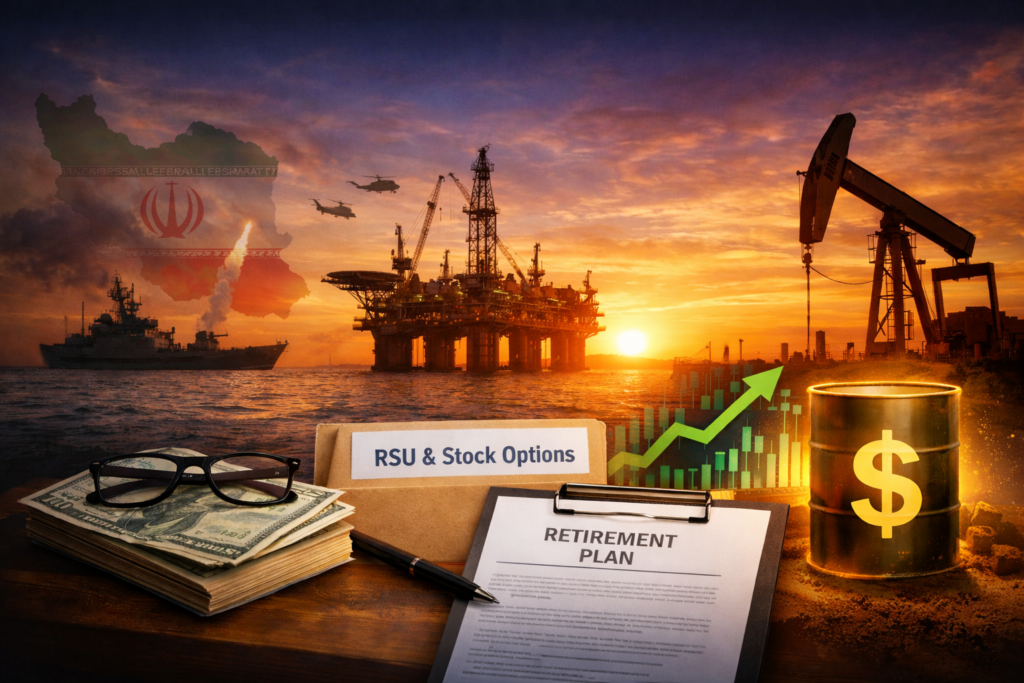



Your career in oil and gas has meant steady paychecks, solid benefits, and a comfortable lifestyle. Still, watching crude prices fluctuate from $100 per barrel to $30 and back can make you question the security of your retirement.
Oil price volatility poses real challenges for energy professionals looking to safeguard their long-term financial well-being. Cyclical downturns, unexpected layoffs, and shifting benefits policies add uncertainty to what might otherwise seem like a straightforward retirement plan. Some financial strategies used in other professions may not fully account for the unique risks you face in the energy sector.
Here are some factors that may be overlooked about energy sector retirement planning, and diversification strategies that could potentially help protect your financial future when oil markets turn volatile.
How Oil Price Volatility May Affect Energy Sector Retirements
The energy sector operates on cycles that can stretch your career across multiple boom-and-bust periods. When oil prices climb, bonuses may flow and stock options could soar. When prices crash, layoffs may follow, and retirement accounts might decline just when you’re closest to leaving the workforce.
This volatility can create several critical retirement risks that energy professionals may underestimate:
- Sequence of Returns Risk: Market downturns during your final working years could potentially damage retirement income potential, though this risk varies based on individual circumstances and market timing
- Concentrated Asset Risk: Heavy weighting in energy stocks and company stock may amplify portfolio swings, though concentration can also provide upside potential during favorable periods
- Employment Income Risk: Job security concerns during price downturns might influence early retirement decisions, though individual employment situations vary significantly
Oil price volatility presents both challenges and opportunities for retirement planning. While downturns can create difficulties, they may also present strategic investment opportunities for those with sufficient risk tolerance and time horizon.
Potential Challenges of Energy-Heavy Retirement Portfolios
Energy professionals often accumulate significant wealth tied to oil and gas performance. Company stock, sector-focused 401(k) options, and energy-heavy investment choices may create concentration that could amplify oil price volatility throughout your financial picture.
Consider what might happen during oil price downturns. Your salary could face pressure from cost-cutting measures. Your company stock may lose value as energy stocks decline. Your 401(k) might suffer from energy-heavy mutual fund selections. Meanwhile, your home value could decline if you live in an energy-dependent region like Houston or North Dakota.
However, this concentration can also provide significant upside during energy sector booms. Energy investments have historically offered substantial returns during favorable cycles, and maintaining some sector exposure may be appropriate for those with relevant expertise and risk tolerance.
The approach isn’t necessarily abandoning energy investments entirely. Energy remains a vital sector with potential long-term growth prospects. One potential approach involves strategic diversification that may help reduce oil price volatility impact while potentially maintaining upside participation – though all investment strategies involve risk and no approach guarantees results.
Diversification Strategies Beyond Traditional Asset Allocation
Diversification for energy professionals may require different considerations than standard asset allocations. Your career already provides energy sector exposure, so your investment portfolio might benefit from emphasizing stability and potentially non-correlated returns, though no investments are guaranteed to be uncorrelated in all market conditions.
Geographic Diversification Considerations
International investments may provide some hedging against oil price volatility, though correlation patterns can change over time. When domestic energy markets struggle, international opportunities might strengthen, though this relationship is not guaranteed and varies by market conditions.
However, geographic diversification requires careful consideration. Some international investments may correlate with energy prices – particularly commodity-focused economies like Canada, Norway, or Russia. Developed economies with diverse industrial bases might benefit from lower energy costs during oil price declines, though individual market performance varies and past performance doesn’t guarantee future results.
Sector Rotation and Alternative Investment Considerations
Some energy professionals consider building portfolios that might benefit from oil price movements in multiple scenarios.
“Energy stocks have vastly outperformed consumer discretionary stocks over rolling 12‑month periods—surging 76 % while consumer discretionary fell 12 %. That gap, an 88 % differential, is the widest since 1989. Historically, the correlation between energy and consumer discretionary sectors has fluctuated significantly depending on commodity prices, consumer behavior, and macroeconomic conditions.” [source]
Alternative investments may deserve consideration for energy sector retirement planning, though each carries specific risks and limitations:
- Real Estate Investment Trusts (REITs): May provide inflation protection and income generation, though REITs face interest rate risk, market volatility, and property-specific challenges that can result in significant losses
- Treasury Inflation-Protected Securities (TIPS): Designed to provide some inflation protection, though they face interest rate risk and may underperform during deflationary periods
- Multi-Asset Income Funds: Offer professional management across asset classes but involve management fees, style drift risk, and no guarantee of income preservation
- Low-Volatility Equity Strategies: Focus on historically stable companies but may underperform during growth periods and volatility patterns can change unexpectedly
These alternatives don’t replace traditional investments and each involves specific risks that should be carefully evaluated in the context of your overall financial situation.
Timing Considerations for Energy Professionals
Oil price volatility might create opportunities for energy professionals who understand market cycles, though timing markets successfully is extremely difficult and many professional investors fail to do so consistently.
During high oil price periods, some professionals consider accelerating contributions to diversified investments rather than increasing energy sector exposure. When oil prices decline, some consider tactical rebalancing – though this approach can require significant risk tolerance and may result in losses if energy fundamentals don’t recover as expected.
This approach generally requires substantial discipline and risk tolerance. It might mean buying non-energy investments when your energy income is highest, and potentially adding to energy positions when industry pessimism reaches extremes – though contrarian investing can result in substantial losses if market sentiment reflects underlying fundamental problems.
Developing Your Oil Price Volatility Planning Approach
Addressing oil price volatility in retirement planning may require systematic evaluation across multiple financial areas. Starting with your 401(k) or employer-sponsored retirement plan might be logical, as this is where you likely have accumulated significant wealth and ongoing contribution capacity.
401(k) Considerations for Energy Professionals
Reviewing your current 401(k) allocations may be worthwhile. Some energy professionals unconsciously overweight energy sector funds, company stock, and commodity-focused options, though the appropriate allocation depends on individual circumstances, risk tolerance, and overall financial picture.
Maximizing contributions to available fund options, particularly during high-income periods, may be beneficial for those who can afford to do so. Target date funds provide automatic diversification, though reviewing their underlying holdings helps ensure they align with your risk tolerance and objectives.
If your employer offers a Roth 401(k) option, some professionals consider splitting contributions between traditional and Roth accounts for tax diversification – though the optimal strategy depends on current and expected future tax rates, which are unpredictable.
IRA and Taxable Account Coordination
IRAs and taxable investment accounts might provide opportunities to add diversification unavailable in your employer plan. Focusing on investment categories that complement rather than duplicate your 401(k) options may be beneficial, though coordination requires careful analysis of your complete financial picture.
International exposure often receives limited attention in employer plans and might provide some oil price volatility considerations, though international investments involve currency risk, political risk, and may correlate with domestic markets during stress periods.
Taxable accounts offer flexibility for various investment strategies and may be suitable for certain approaches – though tax implications, liquidity needs, and individual circumstances should be carefully evaluated.
Estate Planning Considerations
Oil price volatility may affect estate planning for energy professionals in ways that require special attention. Energy sector wealth concentration in company stock, stock options, or pension benefits tied to company performance could create estate tax challenges and liquidity concerns for beneficiaries – though individual situations vary significantly.
Life insurance strategies might provide estate liquidity independent of energy sector performance, though life insurance involves ongoing premiums, policy risks, and tax considerations that should be carefully evaluated.
Trust strategies might provide additional planning opportunities across multiple generations and time periods, though trusts involve complexity, costs, and tax considerations that we feel require professional guidance.
Advanced Considerations for Energy Sector Executives
Senior energy professionals face additional considerations that may require sophisticated planning strategies. Executive compensation often includes stock options, restricted stock units, and performance bonuses tied to oil prices and company performance – each involving specific risks and opportunities.
Stock Option and RSU Management
Energy sector stock options and restricted stock units (RSUs) can create significant wealth during favorable periods – and substantial losses during challenging periods. Systematic exercise and diversification strategies might be worth considering, though each approach involves tax implications and market risks.
10b5-1 plans allow automatic stock sales according to predetermined schedules, which may remove emotion from diversification decisions – though these plans involve commitment to predetermined actions regardless of changing circumstances and market conditions.
Tax planning becomes important for equity compensation diversification. Incentive stock options (ISOs) involve alternative minimum tax considerations, while non-qualified stock options (NQSOs) create immediate tax obligations – each requiring careful evaluation of individual tax situations.
Deferred Compensation Considerations
Many energy companies offer deferred compensation plans that allow executives to defer bonuses and salary during high-income periods. These plans may provide tax advantages but create additional concentration risk and credit risk that should be carefully evaluated.
Deferred compensation investment options may offer limited diversification choices. Seeking broader investment menus that include various asset classes might be beneficial, though options are typically limited by plan sponsors.
Deferred compensation assets remain subject to company creditors, so excessive deferrals during any period could potentially be lost during severe company difficulties – a risk that should be carefully weighed against potential benefits.
When Professional Guidance May Be Beneficial
Oil price volatility creates retirement planning challenges that may extend beyond basic investment allocation. Energy professionals may benefit from advisors who understand sector-specific considerations; however, advisor selection requires careful evaluation of qualifications, experience, and fee structures.
Advisors with energy sector experience may understand the cyclical nature of energy employment, tax implications of equity compensation, and geographic concentration risks – though past experience doesn’t guarantee future advice quality and individual advisor capabilities vary significantly.
Comprehensive planning may become important as you approach retirement. Social Security optimization, Medicare planning, and withdrawal strategy development may require coordination with your overall financial strategy, though optimal approaches depend on individual circumstances and changing regulations.
Systematic evaluation of concentration risk and diversification options may be beneficial regardless of market conditions. While market timing is generally unsuccessful, thoughtful risk evaluation and planning may provide value – though no planning approach guarantees specific outcomes, and all investments involve risk of loss.
Important Disclaimers: This content is for informational and educational purposes only and should not be considered personalized investment advice. All investments involve risk of loss, including potential loss of principal. Past performance does not guarantee future results. Diversification does not guarantee profit or protect against loss. Before implementing any investment strategy, consult with qualified financial and tax professionals who can evaluate your individual circumstances, risk tolerance, and financial objectives. Saxon Financial Group is an SEC-registered investment advisor. For more information about our services and important disclosures, please review our Form ADV Part 2A.
Contact us
Get Started Today
Take control of your financial future with confidence. Contact Saxon Financial Group to schedule your consultation and learn how we can tailor a financial plan around your unique needs as an Oil & Gas professional. Together, we’ll guide you down the most strategic path to achieving financial security and peace of mind.


Tell us how we can help you today